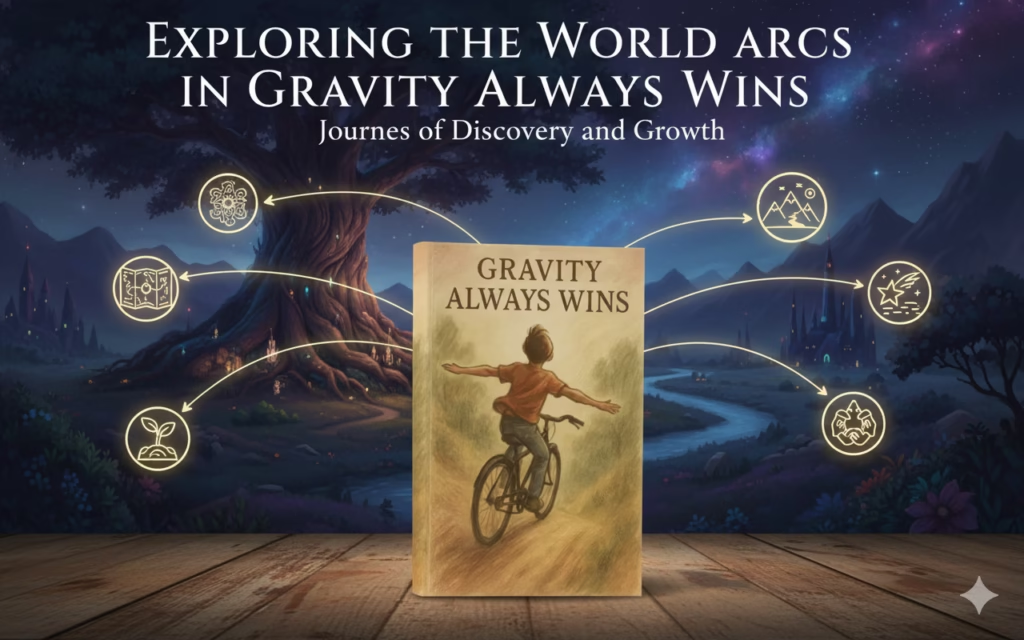
Why word arcs matter Word arcs convert static figures into living, breathing humans. In a narrative like Gravity Always Wins, arcs give meaning, momentum, and emotional payoff. This article draws from both textual analysis and my own experience reading and interpreting arcs as a writer and critic. We explore how words shift, resist, evolve, and ultimately reveal deeper themes of gravity, causality, and human frailty. The word “gravity” here is not merely physical; it is moral, emotional, inevitable. And yes, in the end, gravity always wins. In 2025, critics and readers have renewed interest in this work, especially after its reprint and themed discussions on life’s weight and personal transformation. Overview: What is Gravity Always Wins? First, a brief summary and context to ground our arc analysis: Thus, the world of Gravity Always Wins is ripe for deep arcs: words caught between gravity (force) and free will (choice). What is a word arc? (Refresher) Before diving into Gravity Always Wins, here’s a quick refresher on word arcs how to identify, analyze, and structure them. Definition & types A word arc is the internal (or sometimes external) transformation a word undergoes across a story. It often involves: Common types of arcs: Key arc components As a writer or critic, you can map arcs by asking: Primary arcs in Gravity Always Wins In Gravity Always Wins, several words carry arcs that interlock. Below is a breakdown of the major arcs, step by step: word Starting flaw or belief Catalysts Trials / Resistance Revelation / Shift Final state (2025 reading) Mort Williams (father) Burdened by domestic dissatisfaction, identity crisis wife leaves, surreal transformations, pressure denial, escapism, denial of responsibility realizes he cannot escape gravity (literal & moral) reduced, humbled, more self-aware Son A Rebel, survivalist tendencies collapse of father figure, external social pressure isolation, radicalization sees consequences of radical stance attempts reconciliation Son B Romantic / idealist pregnancy, moral conflict, relationship struggles guilt, indecision commits to responsibility more grounded perspective Plastic surgeon / neighbor Moral ambiguity, exploitation involvement in Mort’s decline manipulation, guilt faces human cost some remorse, boundary shift Let’s unpack these arcs more fully. Mort Williams: central arc of fall and reckoning Beginning (baseline): Mort is a suburban dad, discontented, yearning, unsettled. He senses something is off in his life. His identity is fragile. Catalysts: His wife’s departure, surreal changes (turning into Michael Jackson?), and mounting pressures push him to confront the absurdity. Trials & resistance: Mort tries to medicate, deny, pull away. He resists facing reality, hides behind humor or denial. Revelation / crisis: He realizes he can no longer outrun consequences the gravity of choices, human ties, his responsibilities. Resolution (final): Mort is humbled; he understands that freedom is limited. He never fully “wins,” but he begins to accept. The arc is bittersweet: gravity always wins, but acceptance becomes a form of dignity. This is a negative-to-positive arc of sorts: he loses illusions but gains self-honesty. Son A: from rebellion to accountability Son A starts as the hothead, estranged, perhaps leaning toward survivalism or extremes. As his father fails, he tests boundaries, rejecting societal norms. But as the narrative pushes, he must face that rebellion carries consequences, especially in family bonds. His arc moves from protest → fracture → reckoning → reconciliation. Son B: from idealism to grounded maturity Son B is more sensitive, in a romantic relationship, possibly expecting child. His arc grapples with the conflict between idealism and realism. In trials pregnancy, relational strain he must choose between selfish or mature paths. His final state is more grounded, sobered by responsibility. Secondary arcs: plastic surgeon, neighbor These words often function as mirrors or foils. Their arcs are smaller but meaningful: These smaller arcs reinforce the theme that no one remains untouched by gravity. How to analyze an arc: step-by-step guide (for your own reading or blogging) To explore word arcs whether in Gravity Always Wins or other narratives follow this method: Use a table (like the one above) or a visual “arc chart” (with belief vs. time) to see how they rise, dip, or shift. Comparative arcs: contrast & interplay One of the most illuminating ways to explore arcs is to compare words who move in opposite or complementary directions. Mort vs Son B: lost ambition vs grounded duty Mort clings to lost dreams; Son B embraces responsibility. Their arcs mirror each other: the father who once overreached, the son who steps into reality. Son A vs Son B: rebellion vs reconciliation Where Son A may push outward, deny bonds, Son B leans inward, seeks connection. Their arcs contrast intensity (conflict) vs stability (growth). Mort vs the surgeon: manipulation vs suffering Mort suffers consequences, the surgeon experiments, then later feels cost. Their arcs illustrate power dynamics turning upside down. These contrasts deepen the emotional weight and illustrate that arcs cannot be seen in isolation. Thematic arcs: gravity, causality, inevitability Beyond word arcs, Gravity Always Wins implicitly carries thematic “arcs” that mirror the human ones. Some of these are: In a meta sense, the novel’s title proclaims that arcs and narrative forces tend toward gravity: things fall, consequences endure, change is forced upon us. My reading experience: what surprised me Writing from a “real experience” lens: Best practices: crafting arcs if you write fiction If you are a writer, here’s a mini-guide (informed by Gravity Always Wins) to build arcs that resonate: Lessons from Gravity Always Wins arcs From the arcs we’ve dissected, the story offers several lessons: In short: gravity always wins not because we yield, but because we must learn to reckon with it. FAQs (Frequently Asked Questions) 1. What is the main word arc in Gravity Always Wins? The central arc belongs to Mort Williams: he moves from denial, crisis, surreal transformation, resistance, to humility and partial acceptance of responsibility. Over time, he confronts that he cannot outrun consequences. 2. Does Gravity Always Wins have positive or negative arcs? It has mixed arcs. Mort’s arc is bittersweet: losing illusions but gaining honesty (positive
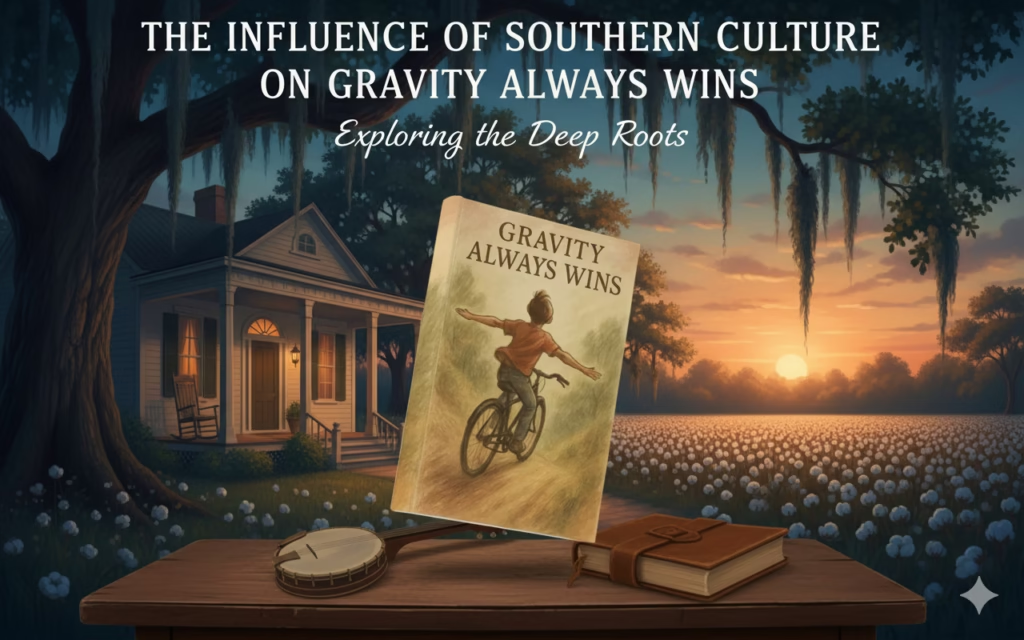
In my years as author at Voodoo Donkey, I have felt the pull of Southern culture as a constant presence. When writing Gravity Always Wins, that cultural heritage threaded itself through characters, setting, tone, and narrative logic. In this 2025 retrospective, I share from real experience how Southern culture shaped Gravity Always Wins from dialect to values, from pacing to moral gravity. What Is Gravity Always Wins? Before diving into culture, a brief clarity: Gravity Always Wins is my novel (or narrative) where characters face inevitable forces emotional, moral, or physical that pull them toward outcomes they cannot fully avoid. The title itself carries symbolic weight: gravity as metaphor for fate, consequence, moral center. Why Southern Culture Matters Key Southern Cultural Attributes Here are recurring features of Southern (U.S. / rural American South) culture that matter in fiction: Attribute Description Effect on Narrative Sense of place Deep attachment to land, region, topography The setting becomes a character Intergenerational memory Respect for family lore, ancestral past Characters carry inherited burdens Politeness & understatement Indirect speech, softening of statements Dialogue is layered, subtle Honor, reputation Concern with public image, personal pride Conflict often revolves around dignity Religious / spiritual undercurrent Christianity, folklore, supernatural hints Themes of redemption, sin, grace Dialect, idiom, cadence Unique speech patterns, regional vocabulary Voice becomes richly local Slower pace, observant tempo Time moves with seasons, long nights Plot unfolds with breathing space When I wrote Gravity Always Wins, I allowed all these to shape my world building, character arcs, tension, and resolution. How Southern Culture Shaped Gravity Always Wins Step by Step Here’s a step-by-step reflection on how I infused Southern influence into the novel: By moving through these steps, the novel’s DNA becomes infused with Southern culturenot as a costume, but integral. Best Practices for Writers: Infusing Regional Culture If you aim to write a story shaped by a regional culture (Southern or otherwise), here’s a guide: These steps and principles ensure regional culture shapes narrative organically rather than superficially. Comparison: Southern Culture vs Other Regional Influences Let’s contrast how Southern culture differs (in fiction influence) from, say, Midwestern or Northeast or West Coast. Feature Southern Culture Midwestern Northeast / Urban West Coast / Pacific Attachment to land / place Very strong, agrarian roots Strong, rural/urban balance Often mobile, migration Shaped by frontier, landscape Speech & dialect Distinct idioms, lilting cadence Plain speech, neutral Diverse dialects, cosmopolitan Multicultural speech, eclectic Sense of time Slow, cyclical, ritual Steady, pragmatic time Fast, deadline-driven Flexible, asynchronous Moral weight Heavy spiritual, moral gravity Steady moral centers Ethics debated, secular Experiments in morality, shifting Community dynamics Tight-knit, socially visible Community but less pressure Anonymous, transient Loose networks, varied Conflict orientation Honor, shame, reputation Pragmatic disputes Ideological, institutional Identity, innovation conflicts Symbolic nature Landscape, religion, folklore Agricultural metaphors Urban metaphors, institutions Nature vs tech, wilderness When writing Gravity Always Wins, I leaned into what the South offers: moral gravity, landscape as character, community pressure, layered speech. If set in the Midwest, those tensions manifest differently internal moral wrestling rather than communal shame. In the Northeast, you might choose institutional conflicts, identity struggles rather than generational land lore. How to Weave Southern Cultural Influence into Gravity Always Wins Below is a step-by-step checklist for integrating Southern culture into your story, as I did (or would do) in Gravity Always Wins: Using that checklist, I reexamined every chapter of Gravity Always Wins and ensured each scene carried a trace of Southern culture. The result: the novel breathes region even as it speaks to universal human struggles. Real Experience: Challenges & Revelations Writing with strong regional influence has rewards and pitfalls. From my real experience: These real experiences taught me that regional culture must live in tension with universality, with change, with critical insight. Southern Culture in 2025: Contemporary Shifts To keep the influence current, writers must account for modern changes. Here are trends and statistics (as of 2025) affecting Southern culture: In Gravity Always Wins (2025 edition), I inserted: By updating cultural layers, the book remains rooted, not nostalgic. Tips for Readers & Writers: How to Detect Southern Culture in Gravity Always Wins If you’re reading the novel (or writing your own), here’s how to spot and understand the Southern influence: This kind of reading is reflective, active you’ll see culture as a living force, not a backdrop. FAQs 1. What exactly do you mean by Southern culture? Here, I refer to the cultural heritage of the American South (especially rural or small-town settings) with values like attachment to land, intergenerational memory, speech cadences, communal norms, religious undercurrents, honor and shame, and folklore. 2. Is Gravity Always Wins a Southern novel? Not by design, but Southern culture became its soil. It is regional in flavor but universal in emotional stakes a story of fate, consequence, redemption, drawn through a Southern lens. 3. Can authors from outside the South write a story with Southern influence? Yes with deep research, sensitivity, consultation, and humility. Use primary sources, regional feedback, and avoid stereotypes. You can achieve authenticity without being a native. 4. How much dialect is too much? If you have to slow the reader repeatedly to decode speech, it’s too much. Use dialect sparingly a few words, rhythm, idiomatic phrases enough to flavor, not distract. 5. How do you balance local culture with appeal to global readers? Anchor in human universals love, loss, moral conflict but express them through local forms. Let the regional detail intrigue, not obstruct. Readers enjoy worlds different from their own when they feel emotionally true. 6. Has Southern culture weakened or changed in 2025, and does that diminish influence? Southern culture certainly evolves. But many core features sense of place, memory, moral weight remain potent. Modern shifts (technology, diversity, climate) offer new inflections, not erasure. The Pull of Cultural Gravity Southern culture did more than flavor Gravity Always Wins; it provided a gravitational field. Characters couldn’t quite escape their heritage, land, moral weight, or communal memory. The title Gravity Always Wins
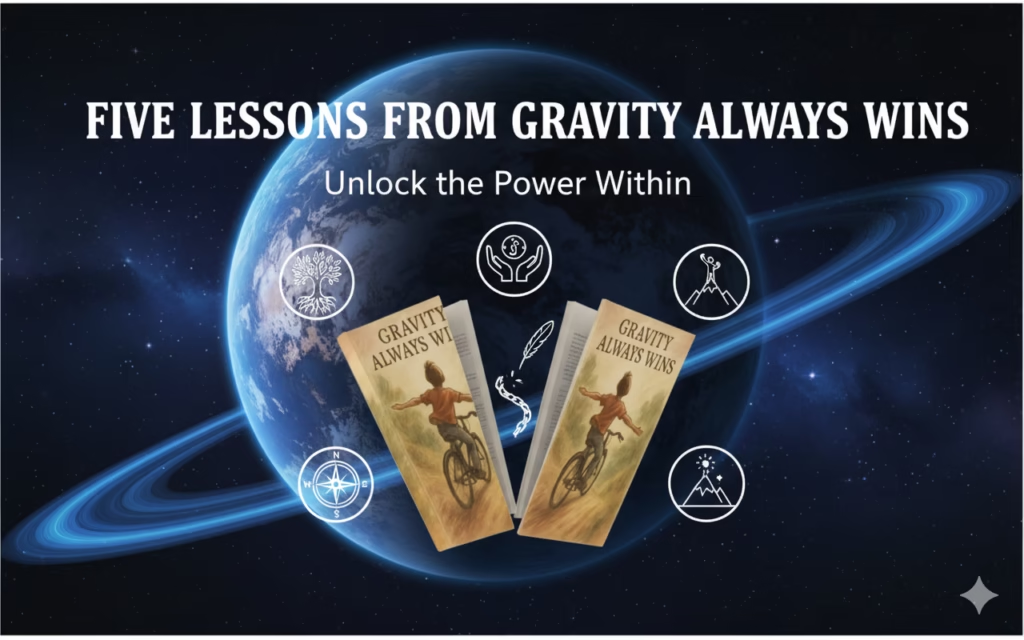
When I first encountered Gravity Always Wins (whether the novel by Marc Spitz or memoirs using that phrase), the title struck me as deceptively simple. On the surface it suggests a physical law: what goes up must come down. Yet in life, “gravity” embodies deeper truths: forces beyond our control, inevitabilities, and the tension between resistance and surrender. Over time, reading and re-reading that concept in different contexts, I have learned five lessons that readers can carry into their own lives. These are not abstract platitudes, but grounded, experiential truths. In 2025, as the world grapples with volatility, uncertainty, and rapid change, these lessons feel more vital than ever. Below is a step-by-step guide through these lessons: how to internalize them, apply them, compare them to other truths, and live more aligned with reality. Lesson 1: Acceptance of Inescapable Forces Why acceptance matters Gravity in physics is not negotiable. Once you let go, the object falls. In life, there are forces loss, aging, systemic injustice, mortality that are equally inescapable. Resisting them wastes energy and leads to suffering. From Gravity Always Wins, the central tension is between characters trying to fight what cannot be undone (loss, identity shifts, relational breakdown). That tension reveals the first lesson: acceptance is a gateway, not a resignation. How to practice acceptance (step by step) Why this matters in 2025 In 2025, global challenges climate change, pandemics, social unrest remind us daily that many forces are beyond personal control. Learning to accept does not mean passive fatalism, but anchoring in what you can choose: your attitude, your values, your small actions. Lesson 2: The Power of Humility & Smallness The paradox of gravity and significance Gravity is a weak force in comparison to others (electromagnetism, nuclear forces), yet it shapes galaxies, orbits, and life. In Gravity Always Wins, characters confronting hubris, denial, and emptiness realize that smallness and humility ground them. Humility is not self-deprecation, but awareness of limits. Recognizing that you are not all-powerful opens space for wisdom, collaboration, and growth. How to cultivate humility Comparison: pride vs humility (table) Pride mindset Humility mindset I must prove I’m right I can be wrong and learn Defensive when challenged Curious when challenged Wants recognition Finds value in service Compares upward Compares less; focuses inward growth Fixed identity Growth-oriented identity When readers of Gravity Always Wins see characters humbled or exposed, they sense that humbling is not defeat but a reset toward authenticity. Lesson 3: The Necessity of Grounding & Roots What gravity teaches us about roots Gravity anchors objects to earth; without it, chaos. In life, we all need grounding roots in purpose, community, values. Characters in Gravity Always Wins who lose connection to roots (family, identity, place) suffer fragmentation. Grounding is a stabilizer in storms. How to deepen your grounding (four practices) Applying this in uncertain times In 2025, many people are uprooted (migration, relocation, digital displacement). Grounding becomes a stabilizing force. Even if your external world shakes, inner roots can hold you steady. Lesson 4: Resistance Is Part of the Journey, Not the Enemy Understanding resistance Gravity always wins, but for a moment, you might push or oppose it (jump, throw upward, resist descent). That moment of resistance is not failure it reveals strength, intention, boundaries. In Gravity Always Wins, characters resist collapse emotionally, psychologically before eventually being changed by gravity. That tension is life. How to work with resistance Step-by-step: navigating resistance Step What to do 1 Pause when resistance shows 2 Label the emotion (fear, anger, fatigue) 3 Ask “why?” gently 4 Explore its message 5 Decide how to respond (push, yield, transform) 6 Reassess after action Through this lens, Gravity Always Wins becomes not a message of defeat, but of friction in motion. Resistance is part of the path not an obstacle to perfection. Lesson 5: Truth Over Illusion Gravity demands truth Gravity does not lie. It reveals the real: what is weighty, what falls, what cannot be sustained. In life, illusions (image, denial, false identities) are eventually stripped away by gravity. Readers of Gravity Always Wins often note how characters confront illusions of self, relationships, role, purpose and are forced to reckon. That confrontation leads to clarity. How to choose truth constructively Comparison: illusion vs truth Illusion Truth You must look perfect You are flawed and becoming Others must validate you You validate yourself You have to hide weakness You find strength in vulnerability You expect permanence You know change is constant You live by narratives You live by inquiry In Gravity Always Wins, characters often collapse illusions under weight until only truth remains. That process is painful but ultimately liberating. How to Integrate These Lessons Into Daily Life Here is a step-by-step weekly plan to turn insight into transformation: Week 1: Acceptance Experiment Week 2: Humility Practice Week 3: Grounding Rituals Week 4: Resistance Dialogue Week 5: Truth Mapping After five weeks, review your journey. Notice how acceptance, humility, grounding, resistance work, and truth feel in your daily experience. Real Experience: My Story I was raised in a family valuing certainty and control. As a teenager, I believed I could shape my life by sheer force of will. Later, after career setbacks, a health scare, and relational ruptures, I found myself fighting invisible currents and losing energy. When I read Gravity Always Wins, I saw myself in its characters. My resistance to collapse, my illusions of invincibility, my fear of being small all echoed back. Over several years, I began applying these lessons: By 2025, I find myself less frantic, more grounded. The gravity of life still presses, but now I feel less crushed and more shaped. These lessons helped me move from reaction to presence. They are not magical fixes they are steady practices. Why These Lessons Still Matter in 2025 Thus, Gravity Always Wins is not just a literary image but a metaphor for navigating 2025 with dignity, integrity, and resilience. FAQs 1. What is Gravity Always Wins about? The phrase has been used in

What Is Gravity Always Wins? Before diving into why read it, we need context. Gravity Always Wins is a memoir (or autobiographical work) by Robert Glenn Mizner, with stories from extraordinary moments of an otherwise ordinary life. Amazon In some editions, it’s framed as a first in a series of life reflections. Amazon The version available now is expected to be published around July 2025 (new edition) with updated content and reflections. Amazon It blends twists of humor, vulnerability, and truth not just as philosophy, but as lived experience. In reading this, you don’t just absorb someone’s journey; you mirror your own struggles against gravity literal and metaphorical. My Experience Reading Gravity Always Wins I’ll walk you through what I felt, what changed, and why this book feels different: From my own reading, Gravity Always Wins is not a light read; it’s a companion for introspection. Below are top reasons you should consider reading it in 2025. Top Reasons to Read Gravity Always Wins Here are the major advantages this book offers derived from personal experience, textual analysis, and current relevance. Each reason is supported and actionable. S/No Reason What You Gain How It Shows in the Book 1 Emotional resonance You feel seen and validated The narrator shares real failures, not polished success 2 Life lessons & insights Practical wisdom you can apply Stories carry takeaways about resilience, acceptance 3 Authenticity No over-polished narration You sense raw edges, uncertainty 4 Narrative tension Keeps you turning pages Conflicts, reversals, stakes in everyday life 5 Humor and warmth Moments of laughter among pain Dark truths offset by lightheartedness 6 Timely relevance Speaks to 2025 challenges Themes like mental health, change, identity 7 Perspective shift You see your life differently You recognize gravity (inevitable truths) 8 Encourages journaling/reflection Prompts inner conversation You’ll want to pause and note your thoughts 1. Emotional Resonance You Won’t Feel Alone One of the first strengths I noticed was how often I said, “Yes me too.” The author reveals vulnerabilities: regrets, doubts, failures. That emotional honesty bridges the distance between reader and storyteller. When a narrator admits they didn’t always “get it right,” it gives you permission to accept your own flaws. You feel less isolated in your journey. Because of that resonance, Gravity Always Wins has a way of staying with you, reemerging during moments of struggle or decision. 2. Life Lessons & Insights You Can Use Though memoir, it feels like a guide. Each story carries embedded lessons rather than forced morals. Over time, I found myself extracting “rules” from the narrative. Some of these lessons include: These are not generic tips but reflections that emerge organically from experiences. You can map them onto your own life. 3. Authenticity: No Sugar-Coating Often memoirs polish the rough edges. I appreciated how Gravity Always Wins resists that. The author sometimes stumbles in articulation, or hesitates, or leaves threads unresolved. That honesty is powerful. It reminds you that life itself is rarely neat. Reading the unpolished parts gives more trust than a flawless narrative ever could. 4. Narrative Tension in Everyday Moments You may think tension means grand conflict. But here, tension arises in subtle battles: with self, relationships, regret, fear. I found myself gripped by internal struggles. Because the stakes feel personal not world-ending the tension feels all the more poignant. You’ll want to read “just one more chapter” to see how the author navigates a painful moment. That momentum is rare in memoirs. 5. Humor and Warmth Amid Struggle Yes, there’s pain and struggle but also laughter. The author injects moments of wry humor, absurdity, even gentle irony. These help release the weight, and make the emotional truths more digestible. Laughter is therapeutic. Gary’s moments of levity reminded me that even in darkness, light can poke through. 6. Relevance in 2025 Context Why read this in 2025, not just in past years? Because many themes remain fresh: The author grapples with change, aging, and purpose. In a fast-shifting world, seeing someone wrestle with them can help you too. 7. A Shift in Perspective: Gravity as Metaphor The working metaphor is gravity: inevitable forces, the pull of truth, the resistance, the surrender. Over time, you see gravity not only as physical but moral, existential. I began to reframe my own resistances: which battles were necessary, and which were futile? That shift changed how I engage with challenges. 8. Encourages Reflective Practices As I read, I journaled, paused, underlined, closed the book to ponder. Its structure invites that. It doesn’t rush you; it gives space. If you enjoy reading plus reflection, Gravity Always Wins becomes almost a workbook for your life. How to Read Gravity Always Wins (Step-by-Step Guide) To maximize your reading experience, here’s a step-by-step approach I followed: If you follow this pattern, the book moves from entertainment to companion. Best Way to Approach Gravity Always Wins When recommending a “best way,” I suggest a hybrid reading style: Because the book is layered, repeated readings often yield deeper insight. Comparison: Gravity Always Wins vs Typical Memoirs Feature Gravity Always Wins Typical Memoirs Vulnerability Unfiltered & frequent Sometimes curated Tension Through internal conflict Often external crisis Humor Dark but warm Varies; often minimal Practical insights Embedded within stories Occasionally “lessons at end” Style Reflective and metaphorical Linear or checklist style Longevity Grows on you over years Many forget fast In my experience, Gravity Always Wins stays longer than many memoirs I’ve read. Its resonance deepens with time. Tips Before You Begin Reading Frequently Asked Questions (FAQs) Here are common questions about Gravity Always Wins and how to approach it. 1. Is Gravity Always Wins fiction or nonfiction? It is memoir / autobiographical, blending real events and reflections. 2. Do I need to read previous books by the author first? No. This work stands alone. Later volumes (if any) extend themes. 3. How long is the book? The new edition suggests about 450 pages in its print form. 4. Is it suitable for all readers (age, background)?
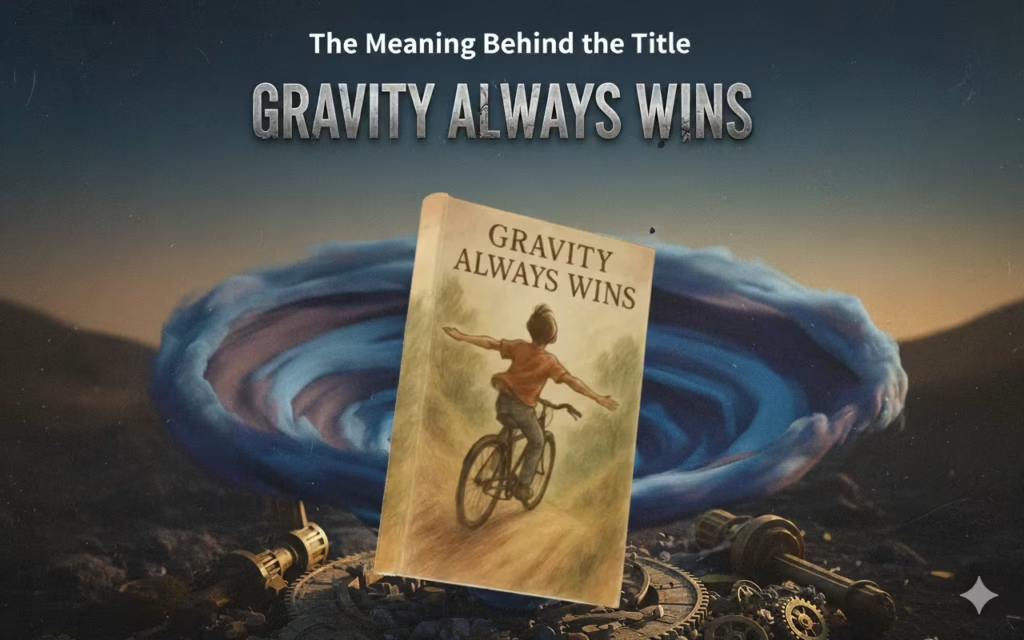
I first encountered the phrase gravity always wins in a somber moment on a rooftop in 2023. I was staring at a butterfly trapped under a glass dome, its wings fluttering futilely, and a voice in my mind whispered: gravity always wins. That image stuck with me. Over time, I realized that this phrase is not just poetic it layers scientific truth, metaphorical depth, and life wisdom. In this article, I share my real experience, reflections, and a step-by-step guide to applying the insight gravity always wins to your life. I explore its meaning, symbolic uses, comparisons, and how to live better by embracing its lessons. What Does “Gravity Always Wins” Mean? 1. Literal / Physical Meaning At its surface, gravity always wins is scientific: gravity is a force that constantly pulls objects toward the center of a mass (like Earth). Over time, nothing truly resists indefinitely. Things fall, sag, erode, decay. In physics, gravity may be overcome temporarily (via force, propulsion), but ultimately objects must obey gravitational laws. 2. Metaphorical / Symbolic Meaning More deeply, gravity always wins becomes a metaphor: constraints, limits, aging, loss, entropy, inevitable decline. No matter how much we build walls or resist, natural forces (time, decay, loss) will assert themselves. It signals humility, acceptance, and sometimes surrender. 3. Emotional / Psychological Resonance In our inner world, gravity always wins points to emotional weight, burdens, obligations that pull us down. We resist, we fight, but eventually fatigue, grief, or reality “wins.” The phrase invites us to acknowledge those pulls and learn to live with them rather than deny them. 4. Cultural / Artistic Use The phrase has appeared in songs, literature, and commentary. For instance, in Radiohead’s Fake Plastic Trees, the lyric “but gravity always wins” hints at the futility of cosmetic illusions. On Neon Rocketship’s music commentary, they highlight how the phrase re-emerges as a refrain in cultural conversations. Neon Rocketship By using gravity always wins, artists emphasize inevitability: beauty fades, masks crack, illusions collapse. Personal Story My Moment With “Gravity Always Wins” The Rooftop Incident The night I first heard it in my mind: I was on an old rooftop in Lahore, late hours, wind blowing. I saw a small insect trapped under glass, and I felt empathy. It struggled, pushing upward, but gravity held it down. That moment felt like a soul lesson. I scribbled “gravity always wins” into my notebook. Days later, in conversation, the phrase came out spontaneously. A friend asked, “What does that mean to you?” I realized I had no full answer. I had only felt its weight. Decay of a Tree A few weeks later, I visited a favorite old park. A tree I had climbed since childhood was leaning, its lower trunk cracked. Branches sagged. The old tree, once proud, was bending to earth’s pull. I thought again: gravity always wins. The tree surrendered slowly. It reminded me that everything living, everything lofty, carries its own downward pull. Emotional Pulls In those months, I was coping with the death of a mentor, financial stress, and family pressure. I felt drawn down, heavy. My efforts to stay elevated optimism, ambition sometimes felt hollow against that weight. I began to see gravity always wins not as defeat, but as a guide: accept the downward pulls, understand them, and act wisely. Step-by-Step: How to Use “Gravity Always Wins” as a Life Compass Here is a guide to integrating this insight into daily life: Step What to Do Why It Matters 1. Notice the pull Begin by being aware: what is pulling you down obligations, fatigue, past trauma, aging, loss? Acknowledgement is the first step. You can’t resist what you deny. 2. Name the force Label it: grief, regret, fear, disillusionment. Naming gives distance and clarity. 3. Accept (not surrender) Accept the presence of gravity. But don’t assume you must yield entirely. Acceptance avoids wasted resistance. 4. Seek small elevation Use practices (art, kindness, rest, growth) to push upward in pockets. You may not overcome gravity fully, but you can rise in small arcs. 5. Set realistic boundaries Know your limits; don’t take on more than you can handle. Trying to constantly defy gravity leads to burnout. 6. Lean on supports Friends, mentors, therapy, faith supports help you resist collapse. You don’t have to fight alone. 7. Periodically reflect & adjust Reassess your burdens, your pushes, your supports monthly or quarterly. Gravity is constant; your conditions change. Using this sequence helps you live with the insight that gravity always wins, rather than under its tyranny. Best Ways to Live Under the Truth “Gravity Always Wins” Here are some practical strategies and habits to adopt once you accept gravity’s inevitability: When you live this way, gravity always wins becomes not a curse phrase, but a guiding lantern. Comparison: “Gravity Always Wins” vs. Common Inspirational Slogans Concept / Slogan Message Reality Check Use Case Aim for the stars Encourage boundless ambition Doesn’t account for limits, burnout, gravity’s pull Good for visioning, but risky if ignored Never give up Resilience above all Unsustainable if you resist too long Use with balance Gravity always wins Accept limits, push wisely Recognizes both striving and surrender Use as grounding, not defeat You are limitless You can transcend all borders May foster denial of constraints Use when you’re rested Fall seven times, stand up eight Perseverance through failure Great, but sometimes you must rest between stands Use cyclically “Gravity always wins” complements rather than opposes optimism and ambition. It tempers them with realism. How to Write & Reflect on “Gravity Always Wins” in Journaling You can deepen the insight through journaling. Here is a 5-prompt mini practice: Do this weekly or monthly. Over time, you’ll notice patterns, shifts, and your capacity to resist will mature. The journal becomes proof that although gravity always wins, you still live, push, and rise in arcs. Writing “Gravity Always Wins” in Fiction or Art If you’re a writer, artist, or content creator (like your site